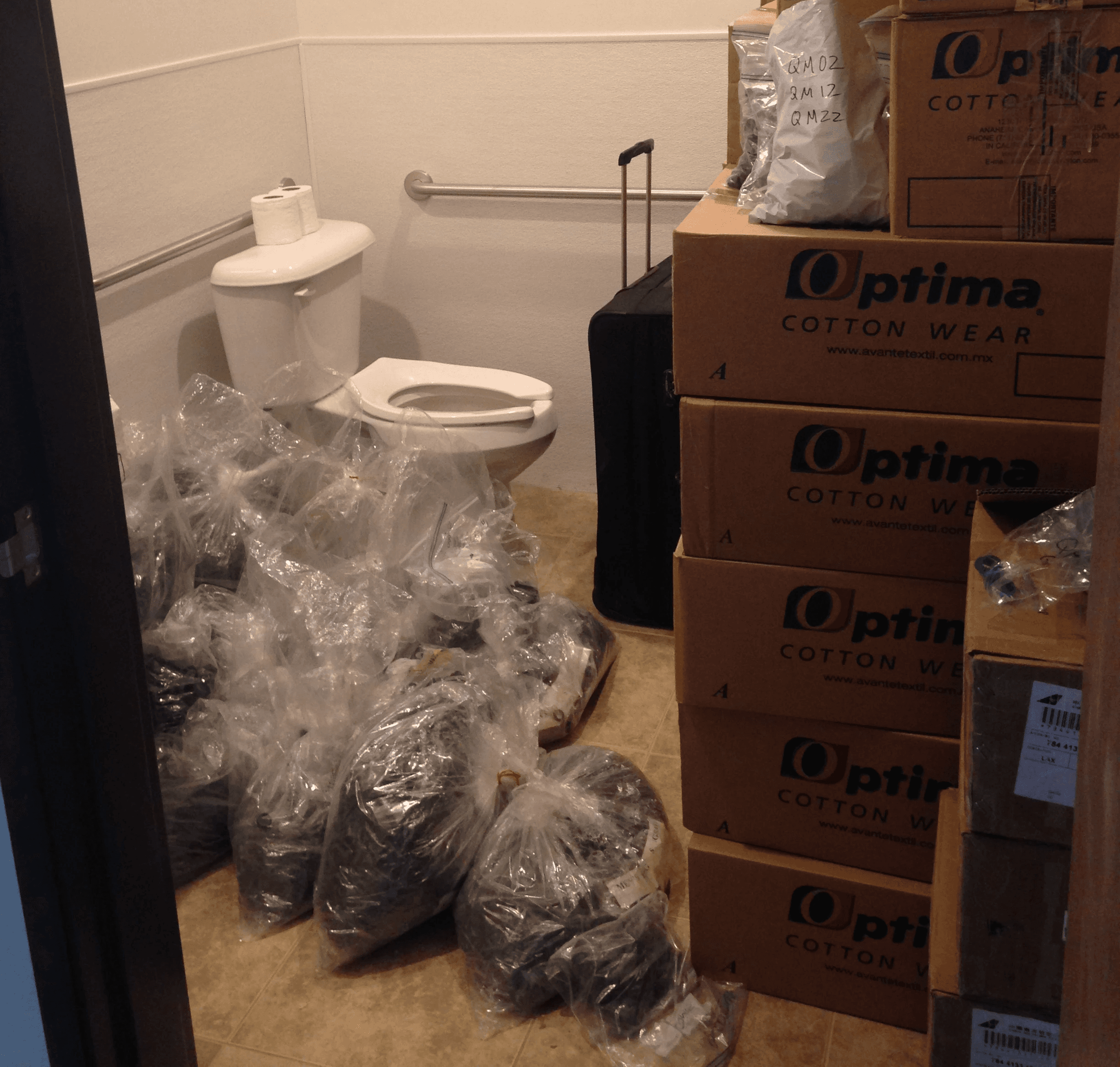
How my WRONG assumptions about selling a business cost me millions.

If you want to sell, know what the buyers are looking for.
I went through three acquisition processes at QALO. Two of them failed. 😵 😵
Every assumption I made about what private equity wanted from my company was wrong, and although I can chalk it up to my youthful naivete, it cost me millions.
On our third try in 2020, we got it across the line. Here's a list of my assumptions, the reality I learned, and my advice for you:
My assumption: Buyers want a fixer-upper.
Reality: They want a rental property.
My Advice: Don't wear a mess as a badge of growth.
We grew fast, so reporting-wise, our company was a mess; the scary thing is, we were proud of it. We wore it as a badge of our growth. We managed inventory the way I eat a bag of Oreos. Keep going until you realize the bag is empty, then buy another one. We didn't have adequate financial reporting, and we didn't think it was a big deal because we thought our job was to focus on growth. We thought the buyer would bring in operational expertise. That's wrong. Private equity isn't interested in putting on a toolbelt and hammering nails. They're spending a lot of money and want a business already set up to generate returns on that investment, while someone earns a salary to operate it.
My assumption: They want us to leave distribution channels unestablished so they can grow into them.
Reality: They want proven distribution channels.
My advice: Increase distribution channels in proportion to your capacity to support them operationally, not based on what you think a potential buyer may want.
It's incredibly tough to sell a company, and most deals fall apart for myriad reasons, from the buyer's cold feet to the seller's preference for power over cash. The first time we tried to sell, we were doing about $20M in ecommerce after 3 years in business.
The next step was going to retail. We wanted to sell at that point because we thought a buyer would want the blue ocean of retail opportunity with the security of our eCommerce.
During meetings with private equity, we were told our product was a fad and hadn't been proven in channels beyond eCommerce. Sure, they want upside, but they also want proof you can access the next distribution channel.
My assumption: They want crazy growth.
Reality: They wanted crazy EBITDA (profit).
My advice: Understand how companies in your industry are valued.
Remember your high school dance when you'd be out there sweating, spanking the planks under the neon lights and disco ball with your cool friends feeling like Kevin Bacon in Footloose...
and then they'd turn the lights on at the venue and you realized you looked more like this...
This is what it's like when an acquirer sees your $ 30M-a-year revenue business and realizes you spend $30M to make it. After over a decade of growing businesses, I think growth is overrated. (I bet you'll never read that in another entrepreneur newsletter.)
There are some instances, such as SaaS, where top-line revenue may be the valuation lever, but even then, growth at all costs will make you a volatile asset, and in 2023, buyers' feet are getting really cold.
For example, I worked with a founder who was trying to 2x sales revenue to sell in 12-18 months. When I asked her how potential acquirers would value her company, she said, "I'm not sure."
I then asked, "So how do we know the plan to 2x your sales revenue in the next year at a lower profit is the right approach to get us prepared for a purchase ?" Turns out that a multiple (such as 6-8x) on profit was used to value her type of company. By going all-in on growth to sell, she was actually decreasing her company's value.
My assumption: They want me around to lead this.
Reality: They do, and they don't.
My advice: Get the best outcome for yourself and your shareholders in a sale, and demand as much money as you can upfront.
You may have been the best person to get your company to the sale point, but not beyond it. They want someone around to operate, but they don't care that it's you.
Keeping you around secures the asset and retains an operator incentivized through the earn-out, but they aim to create a business that does not need to be founder-led. In fairness to private equity groups, most founder-shareholder relationships are messy and emotional, and they can be a massive distraction from the business. If I spent $50M on something, it wouldn't be to host therapy sessions.
My assumption: They care about building the brand.
Reality: They care about the output the brand generates.
My advice: Align these two cares today.
Learn to appreciate the lens through which non-emotional advisors view your business. As a coach, the first thing I ask for when auditing a business is the financials because the advantages you have as a business are found there, not in the celebrities wearing your product.
The strength of a brand is determined by its ability to be chosen repeatedly by customers. This increased lifetime value leads to the metrics you and your buyer should care about.
My assumption: We can distract the buyer from the ugly parts of the business.
Reality: Everything comes to the surface.
My advice: Hiding something does everyone a disservice.
If you are going into a sale and sitting around a conference room table discussing how to hide things, you shouldn't be selling. You're not the first bull they've ridden at the rodeo.
After a sale, a negotiated percentage will be placed in an escrow account to protect the buyer against any undisclosed liabilities. Catfishing your buyer will only be expensive for you. Your job is running your business; they lift up every rock, analyzing how well you're doing that, and they'll find what you're hiding.
Unless the investors or acquirers have past experience investing in FTX, Theranos, or Frank.
An element of my coaching is helping business owners objectively assess their company's performance. If a potential buyer or acquirer is already doing due diligence, it's too late to fix anything. According to Andrew Cagnetta, President of Transworld Business Advisors, one of the largest business brokerage companies in the U.S., "approximately half of all deals fall apart during the formal due diligence stage, and one of the most common reasons this happens is due to the buyer uncovering an issue which the seller did not disclose earlier.”
No company is perfect, but fix what you need to before going to market to sell.
My assumption is that they care about our culture.
Reality: They care about the culture required to perform.
My advice: Audit your org chart before you sell, and do your best to assess the current culture to determine what could be at risk.
It's an important distinction that I have come to appreciate. The most significant misconception among founders about culture is that it belongs in a Willy Wonka-esque land of candy, parties, and magic.
Living in this false reality often leads to underperforming employees who stick around as culture contributors or are shuffled into roles that shouldn't exist at the company.
Your buyer doesn't have an emotional connection to your cousin. They will view him through the lens of his contributions, and your company's culture is responsible for its performance.
My assumption: They'll keep my people because they're great.
Reality: They'll be the judge of that.
My Advice: Do everything you can to protect your people, but understand that selling may mean they lose their jobs.
Selling is exciting for you, and it's terrifying for your team. Employees value the security of leadership they trust. When you sell, the firm ground becomes shaky. Don't promise your team anything you can't deliver on.
This article reflects my experience with assumptions versus reality, but it is not intended to be a sweeping generalization about the intentions of every private equity group or potential buyer. As I read this article back through, I see it's a balance between a passionate, optimistic entrepreneur and a hard-nosed business operator. A healthy balance you should welcome.
When you think about selling your business one day, do you share any of the assumptions I had?